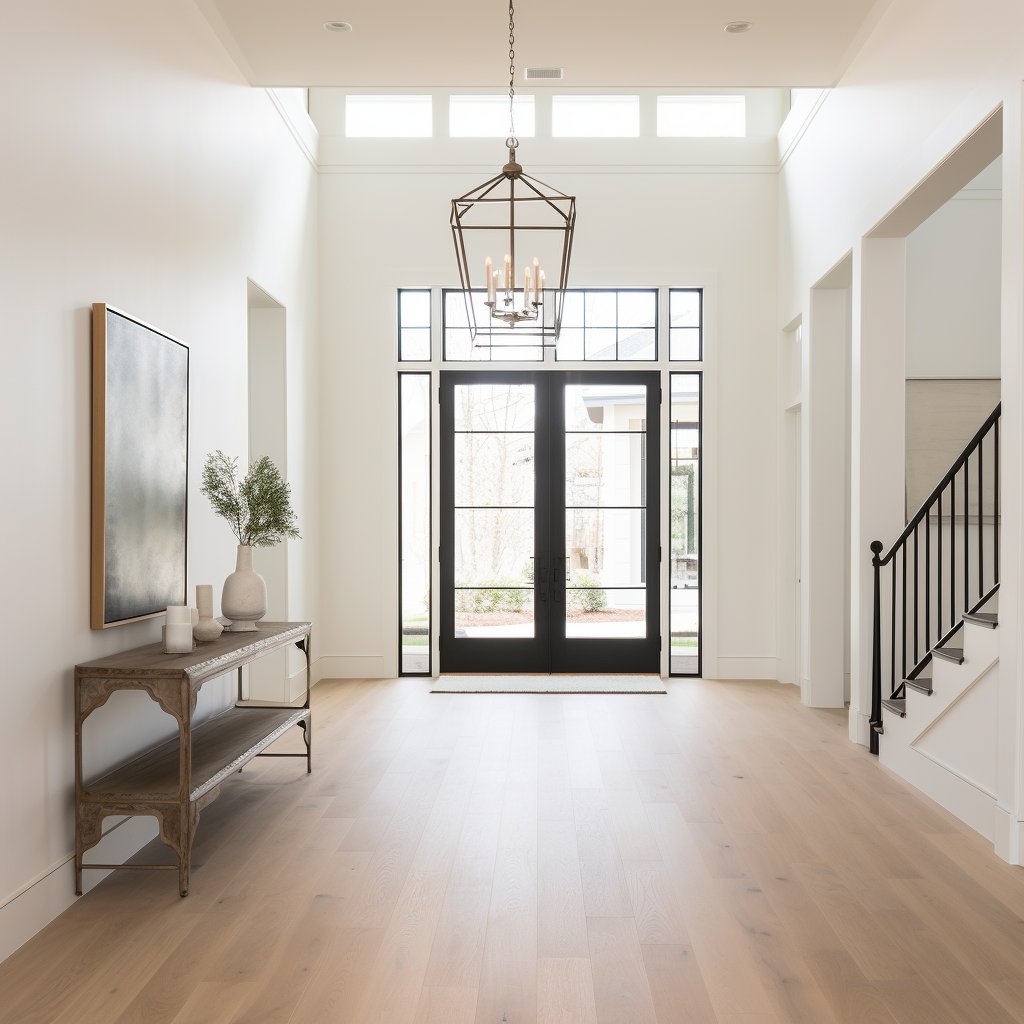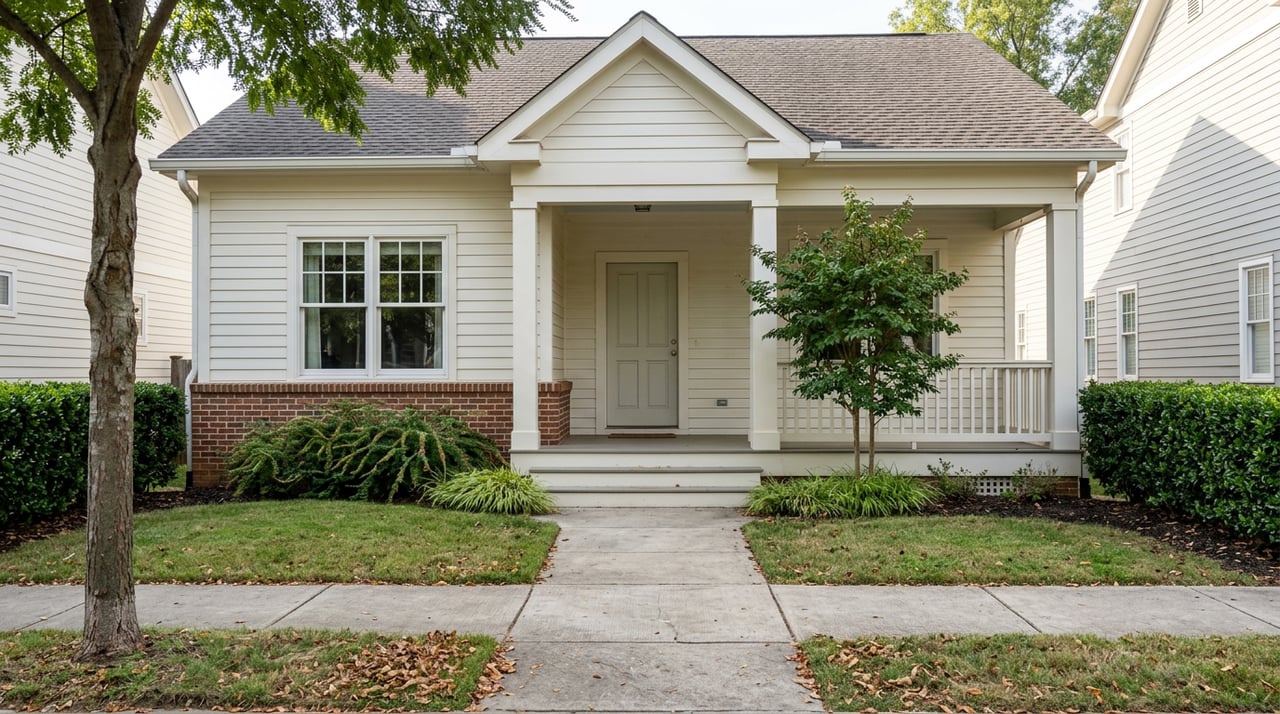
Ask three different trackers what a typical Bloomfield Hills home costs and you will get three different answers. As of August 2026, one listing site put the city's median asking price at $769,000. A separate read of closed sales from October 2025 showed a median of $1.3 million, up 47.2 percent from the year before. A third source, pulling mostly from a small pool of luxury resales as of June 2026, landed at a typical single-family price above $3.3 million. None of these numbers are wrong. They are measuring a market that closes so few homes in a given month that the median jumps around depending on which handful of houses happened to sell.
Price per square foot does not have that problem. Check it across those same sources and the range stays tight: Bloomfield Hills lands somewhere between $193 and $238 a square foot no matter which tracker or month you pick. Birmingham, over the same stretch of sources, runs $387 to $394. The city with the wildly unstable headline price is still charging roughly half as much, per square foot, for the finished house itself, no matter which of its own median readings you believe. That gap, not the median, is the number worth building a comparison around.
The Number That Keeps Moving
Median sale price is sensitive to volume in a way most buyers never think to check. Redfin's October 2025 read on Bloomfield Hills was built on just 8 closed sales for the month, up from 7 the year before. A market moving single digits a month does not have enough transactions to produce a stable median. Sell one $4 million estate and one $700,000 starter home in the same window and the reported "typical" price could land almost anywhere between them, without reflecting what most buyers are actually paying.
Birmingham sells at meaningfully higher volume, which is part of why its median reads more consistently across sources. Redfin logged 111 Birmingham sales in May 2026, up from 95 the year before. More transactions smooth out the effect of any single outlier sale. That volume difference alone explains a good chunk of why Bloomfield Hills' median swings from $650,000 in one reading to $3.3 million in another, while Birmingham's estimates stay in a tighter band.
Price per square foot is less exposed to this problem because it normalizes for the size of whatever happens to sell that month. A $4 million home on 3 acres and a $700,000 townhouse can produce wildly different medians and still land in a similar per-square-foot range once you divide by the space each one delivers. That is why the per-square-foot figure holds steady even while the median bounces, and why it is the more honest number for comparing what these two cities actually cost.
Where The Square Footage Comes From
The mechanism behind the gap is zoning, not sentiment. Birmingham's single-family districts allow minimum lot areas as small as 4,500 square feet in some parts of the city, with larger minimums of 6,000, 9,000, and 20,000 square feet in others, and an exception for homes built on older platted lots that predate the current code. In practice, most Birmingham lots run from a tenth of an acre to about half an acre. That is the physical footprint behind the city's walkable downtown grid, where restaurants, boutiques, and daily errands sit within a short walk of home. You are paying for proximity, not for the ground underneath the house.
Bloomfield Hills runs the opposite zoning logic. Minimum lot sizes there range from three-quarters of an acre up to two full acres depending on the district, and the area south of Lone Pine Road is built predominantly on one-acre minimums. The average Bloomfield Hills property sits on roughly 1.5 acres or more. When a home's price gets divided across that much more land and, typically, that much more finished square footage, the per-square-foot number comes down even as the total price at closing goes up.
That pattern shows up neighborhood by neighborhood. In Birmingham, the Quarton Lake area is known for historic architecture and lake frontage on comparatively modest, in-town parcels, while the Rail District sits at the accessible end of the walkable core, trading square footage for proximity. In Bloomfield Hills, the Cranbrook Triangle and the gated Rudgate enclave sit on lots that typically run from half an acre to a full acre and a half, and the Vaughn Road corridor and Pine Lake waterfront push onto parcels of two acres or more, land that would be difficult to assemble at Birmingham's zoning minimums.
| Birmingham | Bloomfield Hills | |
|---|---|---|
| Price per square foot, current listings (Aug 2026) | $394 | $233 |
| Price per square foot, closed sales (most recent reads available) | $387 (through May 2026) | $193 (Oct 2025) / $238 (as of June 2026, luxury-skewed) |
| Median list price (Aug 2026) | $1.1M | $769K |
| Typical lot size | 0.1 to 0.5 acres | 0.75 to 2+ acres (avg. 1.5+) |
| Zoning minimum lot | as small as 4,500 sq ft in some districts | three-quarters acre to two acres by district |
The Six-Sale Problem
Birmingham's own downtown condo submarket makes the low-volume point even sharper. In the three months ending March 2026, Redfin recorded a median sale price of $682,000 for Downtown Birmingham condos, a 109.5 percent jump from the same period a year earlier. Read on its own, that headline looks like a segment on fire. Read the rest of the same report and the picture gets more complicated. Only 6 condos sold in that window, down from 8 the year before. Price per square foot in that same segment actually fell 18.1 percent. Days on market stretched from 20 to 116.
A submarket closing 6 to 8 units a quarter does not have enough transactions to support a stable median in either direction. One large penthouse sale, or one unit that sold below market after sitting for months, can swing the reported price by six figures without reflecting any real shift in what buyers are willing to pay. It is the same effect behind the swinging Bloomfield Hills medians, playing out inside a single Birmingham zip code.
What This Means If You're Choosing Between Them
None of this makes one city more expensive than the other in any simple sense. It means the two markets are pricing different things, and the median sale price is the wrong tool for telling them apart.
If privacy, acreage, and architectural scale matter more to you than being able to walk to dinner, Bloomfield Hills is where your dollar buys more physical space. Streets in the Cranbrook Triangle or a gated lot at Rudgate deliver more square footage and more land per dollar than a comparable Birmingham address, with the tradeoff that daily errands generally require a car since the city was built around privacy rather than a commercial core.
If a walkable downtown and a compact footprint matter more than acreage, Birmingham is charging a real, measurable premium for that convenience, and the price-per-square-foot gap is the honest cost of it. The Quarton Lake area and the Rail District sit at opposite ends of that walkable spectrum, from established lakefront streets to the entry point of the in-town core.
Neither number, median price or price per square foot, tells the full story by itself. Together they show you what you are actually buying.
A Few Questions Worth Asking Before You Compare These Two Markets
Does Birmingham's higher price per square foot mean the homes are overpriced compared to Bloomfield Hills? No. It reflects what is being priced. Birmingham is charging for land scarcity inside a walkable grid. Bloomfield Hills is pricing acreage and privacy on much larger lots. The per-square-foot gap is the cost of that scarcity, not a sign either market is out of line.
Why do different sites show such different median prices for Bloomfield Hills? Sales volume. With home closings running in the single digits most months, one large estate sale or one smaller resale can shift the reported median by hundreds of thousands of dollars without signaling any real change in the broader market. Birmingham's higher monthly sales volume produces a steadier median for the same reason.
Which number should I actually trust when comparing the two markets? Use price per square foot to compare what the structure itself costs, since it holds steady across sources and months in a way the median does not. Use the median only as a rough gauge of total budget, and treat any single month's reading as one data point rather than the full picture, especially in a market as thin as Bloomfield Hills.
If you are weighing Birmingham against Bloomfield Hills for your own move, the numbers above are a starting point, not the whole conversation. Every enclave inside these two markets, from Quarton Lake to the Vaughn Road corridor, prices differently depending on lot, architecture, and timing. Anthony Maisano works both sides of this border regularly and can walk you through what a specific property, and a specific lot, is actually worth relative to what is around it. Schedule a strategy call to get that read before you make an offer.