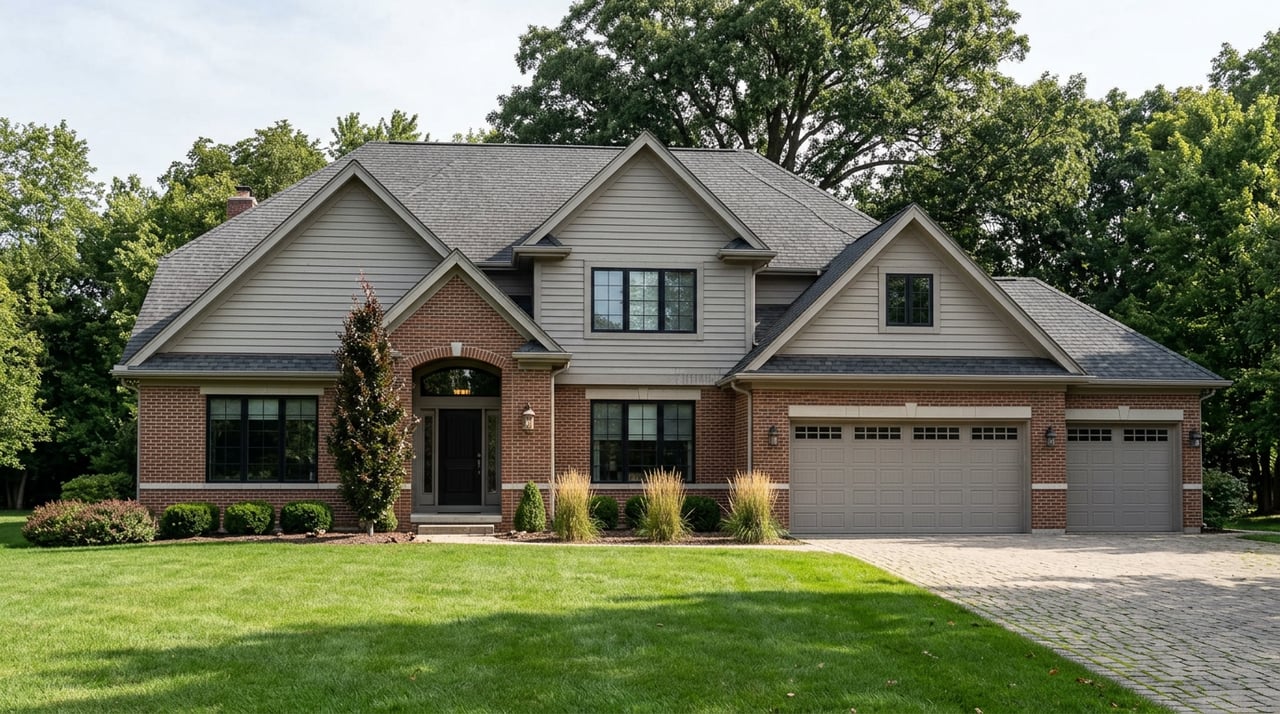
What if the thing most likely to slow down your closing has nothing to do with your roof, your foundation, or your furnace, and everything to do with a boundary you've never noticed on a map?
Two homes a few hundred yards apart in Washtenaw County can look identical on paper. Same era, same finishes, same square footage, same asking price range. But if one sits inside the City of Ann Arbor's water and sewer service area and the other sits just outside it in a township like Scio, Ann Arbor Township, Pittsfield, or Lodi, they are not headed toward the same closing. One of them needs a stranger's sign-off before the deed can transfer. The other doesn't.
That stranger works for the Washtenaw County Environmental Health Division, and the requirement is called the Time of Sale (TOS) Program.
The Line You Can't See From the Curb
Anyone shopping in the greater Ann Arbor market eventually crosses from municipal water and sewer into private well and septic without any visual cue that it happened. The house doesn't change. The lawn doesn't change. What changes is what's underground and who has to approve it before you can sell.
Washtenaw County's Time of Sale Program requires an inspection of the well and septic system before a property changes hands, and it applies specifically to homes that rely on those on-site systems rather than city water and sewer. If your home is on municipal service, this entire process is irrelevant to you. If it isn't, it's mandatory, not optional, and not something a buyer or seller can waive by agreement.
That distinction matters more in this market than in most, because Washtenaw's mix of dense university-adjacent city blocks and surrounding rural townships means well-and-septic properties and municipally served properties often sit within the same school district, the same commute radius, and the same price bracket. The listing sheet won't tell you which one you're looking at. The county's requirement will.
What the County Actually Requires
The mechanics are specific. A certified inspector evaluates both the septic system and the well, and the report goes to the county's Environmental Health Division for review. According to the county's own program materials, that review is completed within five business days when everything is submitted correctly, and results stay valid for 12 months after the inspection.
If the system passes, the sale proceeds without further county involvement. If it fails or is found significantly inadequate, the county requires what it calls "maximum feasible compliance," meaning the seller has to bring the system up to code, or as close to it as site conditions allow. To close before that work is finished, the county's own FAQ documentation spells out exactly what has to be submitted: a corrective action plan (which may simply be a permit to replace the system), proof of a signed contract to complete the repair, an escrow account holding one and a half times the estimated cost of the work, and the appropriate fee. Property owners who disagree with a finding can appeal to the Washtenaw County Board of Health.
None of that is a formality. It's a real financial holdback negotiated into the closing, sized specifically to cover a repair that hasn't happened yet.
What It Actually Costs
Here's what sellers and buyers on well-and-septic properties in this market are typically looking at, based on current Michigan industry pricing for these inspections and repairs:
| Item | Typical Cost |
|---|---|
| Standard septic evaluation | $200 to $450 |
| Tank pumping (usually required with inspection) | $250 to $450 |
| Excavation to locate tank or distribution box | $100 to $300 |
| Full inspection with pumping | $450 to $900 |
| Septic tank replacement | $3,000 to $7,000 |
| Drain field replacement | $5,000 to $15,000 or more |
The gap between the top and bottom rows is the entire point. A passing inspection is a rounding error in a real estate transaction. A failing one is a five-figure renegotiation that has to happen inside a closing window, with an escrow account sized at 150 percent of the repair estimate sitting between the seller and their proceeds.
Why the County Bothers at All
It's fair to ask whether this is a bureaucratic hurdle for a problem that rarely occurs. The county's own reporting on the program's early results said otherwise. When Washtenaw first rolled out mandatory inspections, county data showed a meaningful share of systems checked were already failing or inadequate, with a comparable share of wells found to lack adequate protection against contaminants. That early data is part of the record the county has pointed to in explaining why it treats this as a required inspection rather than something left to buyers and sellers to negotiate on their own.
Nearly half of the septic systems in the county have reached their designed service life expectancy, per the county's own program materials, which is the more durable fact here. Many of these systems were installed correctly decades ago and simply aged out of service on a timeline nobody was tracking, since there's no reminder notice for a septic tank the way there is for a mortgage payment or a property tax bill. The county's requirement isn't targeting negligent owners. It's catching systems that quietly reached the end of their service life between the last time anyone thought about them and the day a sale forced the question.
Why the Same House Wouldn't Trigger This a County Away
If you're comparing Ann Arbor to nearby markets, this is where the comparison gets interesting. Washtenaw is one of roughly 30 to 35 Michigan counties, out of 83 statewide, that has adopted a point-of-sale requirement like this, as of 2026. Oakland and Livingston counties have their own versions, but with different rules. Livingston, for instance, allows an inspection completed up to 24 months before the transfer date to satisfy the requirement, a longer window than what applies in Washtenaw. Macomb County, by contrast, has no similar county-wide mandate at all.
The practical effect is that identical transactions, run by the same buyer and the same agent, look completely different depending on which side of a county line the home sits on. A buyer moving from a county with no such program into a well-and-septic property in Washtenaw isn't just changing address. They're stepping into an inspection regime that may have no equivalent where they came from, and if they don't know to ask about it early, it becomes the reason their closing date moves.
Getting Ahead of It
The county's own guidance and the pattern in most delayed closings point to the same fix: order the inspection before you list, not after you're under contract.
- Have the well and septic inspected at or before listing, so any repair needs surface while you still control the timeline
- Confirm your system has a septic permit or site plan on file with the county. If it doesn't, expect the county to also require a tank pumping and inspection as part of the process
- Keep a copy of the report yourself. Results are valid for 12 months, and the report goes to whoever is listed as the applicant, so if that isn't you, get a copy in writing
- If your system is on a well, plan for water sample testing as part of the same process. A reverse osmosis system on the property typically requires an additional sample
- Build repair time into your listing calendar if the system is aging. Drain field work in particular can take longer than a typical closing window allows
None of this is a reason to avoid a well-and-septic property in this market. It's a reason to ask the question before you're three weeks from closing.
A Few Questions Worth Asking Before You List or Offer
Does this apply if I'm buying inside the city of Ann Arbor? Only if the specific property relies on a private well or septic system rather than municipal water and sewer. Most homes inside the city's core service area are on municipal utilities and aren't affected.
How long is a passing inspection good for? Results are valid for 12 months, which is why sellers are encouraged to start the process at listing rather than waiting for an accepted offer.
What happens if the system fails right before closing? The county allows the sale to proceed if the seller submits a corrective action plan, proof of a signed repair contract, and an escrow account covering one and a half times the estimated repair cost, along with the required fee.
Is this the same everywhere in Southeast Michigan? No. Washtenaw's program is its own, distinct from Livingston's or Oakland's requirements, and Macomb County has no similar mandate at all. The county line matters as much as the house.
If you're buying or selling a well-and-septic property anywhere in the greater Ann Arbor area, whether it's in the city's surrounding townships or further out toward Dexter or Chelsea, this is exactly the kind of detail worth walking through before you sign anything. Anthony Maisano works this market regularly and can help you build a timeline that accounts for it from the start. Schedule a strategy call to talk through your specific address and what it means for your closing.